
AI Revolution: How Machine Learning is Transforming Industries

The world is witnessing an unprecedented transformation driven by artificial intelligence and machine learning. From healthcare diagnostics to financial forecasting, AI is reshaping how industries operate, innovate, and serve their customers. This revolution isn't just about automation—it's about augmentation, enabling humans to achieve more than ever before.
The Healthcare Revolution
Machine learning algorithms are now capable of analyzing medical images with accuracy that rivals or exceeds human experts. In radiology, AI systems can detect tumors, fractures, and other anomalies in seconds, potentially saving countless lives through early diagnosis. Pharmaceutical companies are using AI to accelerate drug discovery, reducing the time and cost of bringing new treatments to market.
"AI in healthcare isn't about replacing doctors—it's about giving them superpowers to make more accurate diagnoses and personalized treatment decisions."
Beyond diagnostics, AI is transforming patient care through predictive analytics. By analyzing vast amounts of patient data, healthcare providers can identify at-risk patients before conditions worsen, enabling preventive interventions that improve outcomes and reduce costs.
Financial Services Transformation
The financial industry has embraced AI with remarkable speed. Banks and fintech companies are using machine learning for:
- Fraud Detection: Real-time analysis of transaction patterns to identify suspicious activity
- Credit Scoring: More accurate risk assessment using alternative data sources
- Algorithmic Trading: High-frequency trading strategies that adapt to market conditions
- Customer Service: AI-powered chatbots that handle routine inquiries 24/7
These applications are not just improving efficiency—they're creating entirely new business models and revenue streams. Robo-advisors, for example, have made wealth management accessible to millions who previously couldn't afford traditional financial advice.
Manufacturing and Supply Chain
Smart factories powered by AI are optimizing production in ways previously impossible. Predictive maintenance systems analyze equipment sensor data to predict failures before they occur, minimizing downtime and extending equipment life. Quality control systems use computer vision to detect defects with superhuman accuracy.
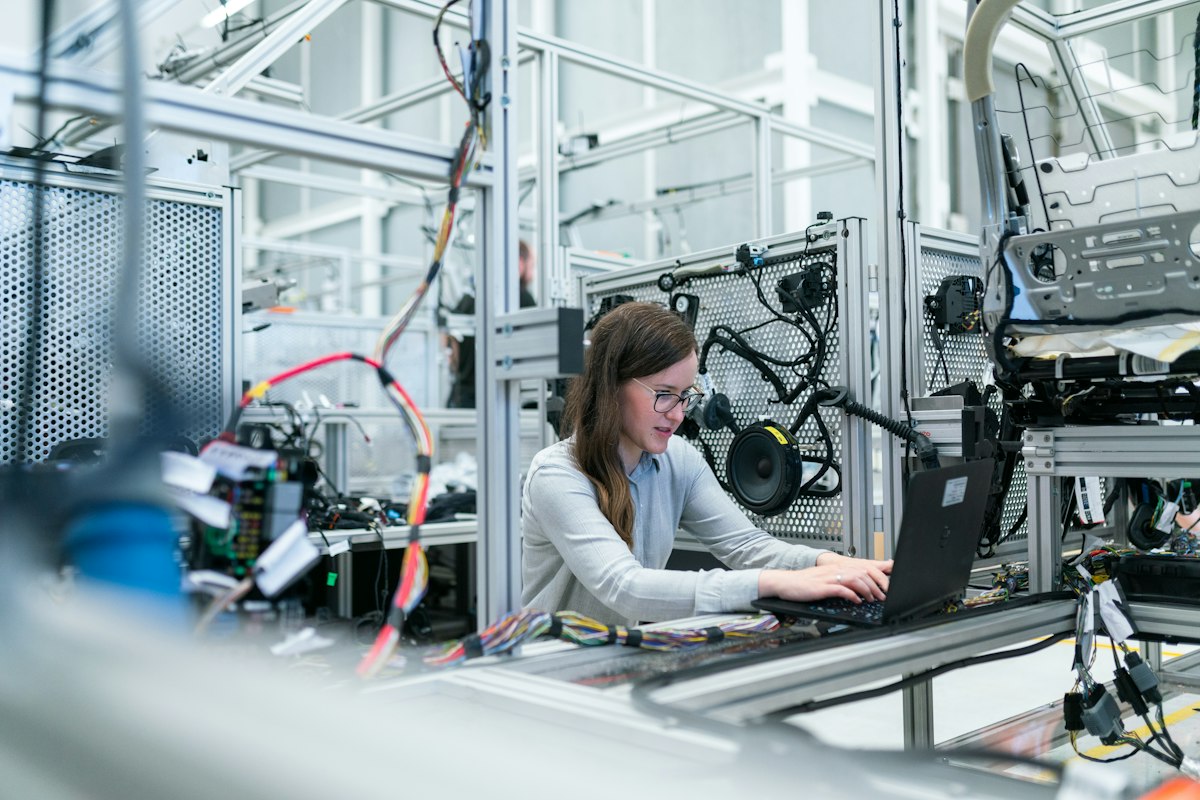
Supply chain optimization is another area where AI excels. Machine learning algorithms can predict demand patterns, optimize inventory levels, and identify the most efficient shipping routes, reducing costs and improving customer satisfaction.
The Road Ahead
While the potential of AI is enormous, challenges remain. Ethical considerations around bias, privacy concerns, and the need for explainable AI are critical issues that must be addressed. The workforce will need to adapt, with new skills becoming increasingly valuable.
However, the overall trajectory is clear: AI will continue to transform industries in ways we're only beginning to imagine. Organizations that embrace this transformation strategically and responsibly will be well-positioned to thrive in the coming decades.
The AI revolution is not a distant future—it's happening now. By understanding its implications and preparing accordingly, businesses and individuals can harness this technology to create value and drive progress across every sector of the global economy.
Related Articles

The Future of Quantum Computing in Enterprise
As quantum computing matures, enterprises are exploring how this revolutionary technology can solve complex problems.
Alex Turner

Breakthrough Research Shows Promise for New Treatments
Medical researchers announce promising results from clinical trials that could lead to revolutionary treatments.
 Dr. Emily Watson

Global Markets Rally as Economic Outlook Improves
Stock markets worldwide show strong recovery as investors respond positively to new economic data.
 Michael Ross
Join the Conversation
Excellent overview of AI's impact across industries. I'd love to see a follow-up article focusing specifically on the ethical considerations and how companies are implementing responsible AI practices.
As someone working in healthcare tech, I can confirm that AI is revolutionizing patient care. The predictive analytics capabilities alone have helped us reduce readmission rates significantly. Great article!
The section on manufacturing really resonated with me. We implemented predictive maintenance last year and the ROI has been incredible. Downtime reduced by 40% in just six months.
Leave a Comment